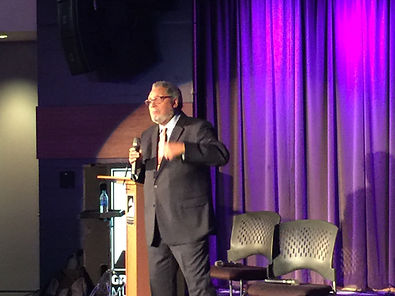
Founder's Story
Cecil Max Wright: A Life of Breaking Barriers and Building Community
September 20, 1942 – October 2017
Cecil Max Wright lived a life defined by firsts, by service, and by an unwavering commitment to opening doors for those who would follow. Born in Hiawatha, Kansas, on September 20, 1942, Cecil's journey would take him from the heartland to the mountain peaks of Colorado, the battlefields of Vietnam, and the boardrooms of Silicon Valley's pioneering technology companies.
Early Years and Foundation
Raised in Topeka, Kansas, and Denver, Colorado, Cecil developed the resilience and determination that would characterize his remarkable life. His formative years in these communities shaped his understanding of both the possibilities and the barriers that existed for Black Americans in mid-20th century America.
Breaking Barriers on the Slopes
In an era when recreational skiing remained largely the province of white Americans, Cecil became a trailblazer in Colorado's mountain rescue community. As the first Black member of the Denver Rescue Ski team, he not only demonstrated exceptional skill on the slopes but also joined an elite group of volunteers dedicated to saving lives in the unforgiving Rocky Mountain terrain. At a time when African Americans faced discrimination even at ski resorts, Cecil's presence on rescue missions represented a quiet revolution—proof that excellence knows no color and that heroism requires only courage and competence.
His achievement came just years after Floyd Cole and Bryce Parks became the first Black ski patrollers in Denver in the 1950s, continuing a legacy of African Americans who refused to be excluded from any arena where they could serve and excel.
Civil Rights Leadership: Courage Under Fire
Cecil's commitment to justice extended far beyond the mountains. As leader of the Denver chapter of the Congress of Racial Equality (CORE), he worked alongside one of the movement's most influential figures, James Farmer. Farmer, co-founder of CORE and organizer of the historic 1961 Freedom Rides, was recognized as one of the "Big Six" leaders of the Civil Rights Movement, standing with Dr. Martin Luther King Jr., Roy Wilkins, and Whitney Young.
Under Cecil's leadership in Denver, the local CORE chapter pursued CORE's founding mission: erasing the color line through nonviolent direct action. This was demanding and often dangerous work, requiring both moral courage and strategic brilliance. The dangers were not abstract—reports indicate that Cecil's car was firebombed during his time leading CORE, a stark reminder that the violence civil rights workers faced in the Deep South also reached into Northern and Western cities. Like the Freedom Riders whose bus was firebombed in Anniston, Alabama, Cecil faced direct threats from those who sought to silence the movement through terror.
Despite these threats, Cecil remained steadfast. He brought both moral courage and strategic brilliance to the fight for equality in Denver, advocating for fair housing, employment opportunities, and equal treatment in a city and state that were themselves navigating the turbulent waters of desegregation. His willingness to continue his work even after such violence testified to his unwavering commitment to justice.
Service in Vietnam
When his country called, Cecil answered. Drafted during the Vietnam War, he enlisted in the United States Marine Corps, serving from 1964 to 1968. Rising to the rank of Sergeant, Cecil was assigned to administrative duty where his organizational skills and leadership abilities were recognized by top U.S. commanders. He served honorably during one of America's most controversial conflicts, bringing the same excellence to military service that he brought to every endeavor. He received an Honorable Discharge in 1968.
Academic Achievement
Even as he pursued his various professional paths, Cecil never stopped learning. He earned his Bachelor of Arts in Sociology from Regis University in Denver, demonstrating his commitment to understanding the social structures that shaped American life. Later in life, driven by a deep spiritual calling, he earned a Doctorate in Divinity from the Universal Ministries School of Theology in 2006, adding theological scholarship to his already impressive resume.
Silicon Valley Pioneer
Cecil was among the first wave of Black executives to work in what would become known as Silicon Valley, arriving during the industry's formative years in the 1970s and 1980s. This was a time when pioneers like Roy Clay—known as the "Godfather of Silicon Valley"—were creating opportunities for African Americans in technology companies. Cecil worked for both early start-ups and large defense contractors, bringing his human resources expertise to an industry that was just beginning to recognize its potential to transform the world.
His presence in Silicon Valley during this era was particularly significant. As one observer noted, in the late 1980s, Silicon Valley technology companies were notably more diverse at the executive level than they would become in later decades. Cecil was part of that generation of Black professionals who proved that diversity and excellence go hand in hand.
A 45-Year Career in Human Resources and Career Architecture
For 45 years, Cecil dedicated himself to the field of Human Resources, where he found his true calling: helping others succeed. Colleagues remember him as a mentor, advocate, and coach who cared deeply about each individual's success. He had a particular gift for working with young people, offering expert advice and wise counsel that helped shape countless careers.
From September 2000 to March 2015, he worked at EMPI, A Bayside Company, and in July 2015, he founded Max Edwards Co., LLC, where he served as President until his passing. At Max Edwards Company, Cecil developed an innovative methodology he called "Career Architecture"—a framework that reflected his deep understanding of how careers are built, not just obtained.
Cecil was deeply committed to learning more about what he called "human engineering"—the dynamics of power and control that impact life choices. He understood that career success wasn't simply about skills and qualifications, but about navigating complex organizational dynamics, understanding power structures, and making choices that aligned with one's authentic self and aspirations. His Career Architecture methodology helped individuals understand these forces and build careers with intentionality and strategic vision.
Throughout his career, Cecil approached HR not merely as policy and procedure, but as an opportunity to change lives, one career at a time. His work was grounded in the belief that every person deserves not just a job, but a career that honors their potential and contributes to their flourishing.
Athletic Excellence and Community Building
Cecil's competitive spirit found another outlet on the tennis court, where he became not only a champion but also a mentor and community builder. As a member of the San Pablo Tennis Club in Oakland, he won a USTA national championship in the 40+ age bracket. The San Pablo Tennis Club, established in 1954, held special significance in the Bay Area's Black community. Due to racial discrimination, San Pablo Park's courts were among the few places in Berkeley where Black tennis players were welcomed. In 1987, the club's Men's 3.0 team, known as the Topspins, won the USTA National Championships in Charleston, South Carolina—a testament to the excellence that flourished even in the face of exclusion.
But Cecil's contributions to tennis extended far beyond his own competitive achievements. Working with the USTA in the Bay Area, he developed and ran a youth ball girl and boy training program specifically designed for Black youth. For several years, Cecil dedicated himself to this initiative, inspiring many young people to develop a passion for tennis. Through this program, he created opportunities for young Black athletes to participate in professional tournaments as ball kids—roles that provided not only valuable experience but also visibility and access to a sport that had historically excluded them.
Cecil was also a world traveler who combined his love of tennis with his passion for exploration. He traveled to experience the sport's greatest stages: the US Open in New York, Wimbledon in London, and the French Open in Paris. These journeys allowed him to witness tennis excellence at its highest level while broadening his cultural horizons.
Masonic Leadership
Cecil was also a dedicated leader in his Masonic lodge, participating in the Prince Hall Masonic tradition—a branch of Freemasonry founded by Prince Hall in 1784 to provide African Americans with the brotherhood and self-improvement opportunities denied them by mainstream Masonic lodges. Through his Masonic service, Cecil joined a tradition that included Booker T. Washington, W.E.B. Du Bois, Thurgood Marshall, and countless other leaders who found in the fraternity a vehicle for community service and personal development.
Family and Faith
Cecil resided in Southern and Northern California, including Los Angeles, Oakland, and Stockton. He was a member of God's Throne Baptist Church in Stockton, where his faith community knew him as a man of deep spirituality and service.
Professional Certifications and Education
Beyond his degrees, Cecil held various certificates in Human Resources and earned certification in Section 8 Housing Occupancy, demonstrating his commitment to serving diverse communities and addressing housing needs.
Legacy
Cecil Max Wright's life was a tapestry woven from threads of courage, service, excellence, and compassion. He broke barriers not for glory, but to create pathways for others. He served his country, his community, and countless individuals with a generosity of spirit that left an indelible mark on all who knew him.
From facing down firebombs in Denver to developing young tennis players in Oakland, from serving in Vietnam to pioneering in Silicon Valley, from earning national championships to creating Career Architecture—Cecil's life demonstrated that heroism takes many forms and that one person's commitment can ripple through generations.
His colleagues spoke of him as someone who helped people navigate paths to success, particularly young people seeking guidance. He was described as "the best of us," someone whose legacy lives on in the people whose careers he helped build, one dream at a time.
In an era that often tried to limit what Black Americans could achieve, Cecil Max Wright responded by achieving the extraordinary—not once, but repeatedly, across multiple fields and throughout his entire life. He was a pioneer on the ski slopes, in the civil rights movement, in military service, in Silicon Valley, on the tennis court, in youth development, and in the Masonic lodge.
But perhaps his greatest achievement was simpler and more profound: he showed up, day after day, to help others—even when his car was bombed, even when the path was uncertain, even when the barriers seemed insurmountable. In doing so, he lived out the highest ideals of all the organizations and causes he served—that every person deserves dignity, opportunity, and support in pursuing their dreams.
Cecil Max Wright's life reminds us that heroism takes many forms, that excellence requires no permission, and that a life well-lived is measured not by titles or accolades, but by the people we help along the way and the doors we open for those who follow.
"Cecil helped so many people navigate a path to success, especially young people with his expert advice, his advocacy and wise counsel. His legacy will forever live on in the people whose careers he helped build, one dream at a time." — Colleague tribute